
Agrivoltaics in India: Benefits of Combining Solar Energy with Agriculture | ACE RenewTech
Introduction
Agriculture and renewable energy are two important sectors contributing to India's economic growth. With increasing electricity demand and the need for sustainable farming practices, combining solar energy with agriculture is becoming an interesting opportunity. This concept is known as <Agrivoltaics, which allows agricultural activities and solar electricity generation to take place on the same land.
In India, where agricultural land and energy requirements are both significant, agrivoltaic systems offer an alternative approach to land utilisation. By integrating solar photovoltaic panels with suitable farming practices, farmers and energy developers can explore opportunities for agricultural production and renewable energy generation.
What Is Agrivoltaics?
Agrivoltaics refers to the combined use of land for agricultural activities and solar photovoltaic electricity generation. Instead of using land exclusively for farming or solar power production, this approach allows both activities to coexist through carefully planned solar panel arrangements.
Also known as Agrophotovoltaics, the system can support crop cultivation, livestock grazing and solar energy production, depending on the design and local conditions.
Unlike conventional solar installations, agrivoltaic projects require consideration of agricultural requirements such as sunlight availability, crop growth, irrigation, equipment movement and soil conditions.
How Does an Agrivoltaic Solar Power Plant Work?
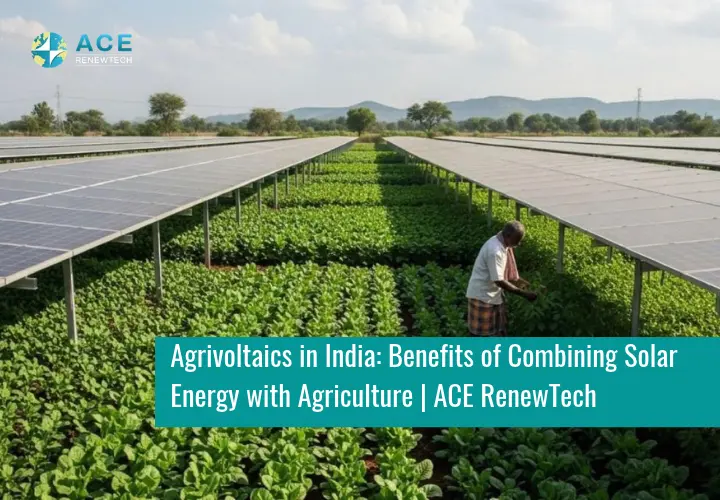
An Agrivoltaic Solar Power Plant uses photovoltaic modules installed above or alongside agricultural areas. The panels capture sunlight and convert it into electricity, while the available land continues to support selected agricultural activities.
The design depends on the type of crops, local climate, solar irradiation and farming requirements.
Common approaches include:
- Elevated solar panels that allow farming equipment and agricultural activities underneath.
- Wider panel spacing to provide sufficient sunlight for crops.
- Livestock grazing in suitable areas beneath or between solar structures.
- Solar installations designed around crop requirements and irrigation access.
These systems combine the principles of Solar Power for Agriculture with efficient land utilisation.
Major Benefits of Agrivoltaics
1. Efficient Land Utilisation
One of the major advantages of Agrivoltaic Solutions is the ability to use the same land for agricultural production and electricity generation. This can be particularly useful in areas where land availability is limited.
A properly designed Agriculture Solar Plant can accommodate suitable farming activities while generating renewable electricity.
2. Potential Water Conservation
Solar panels can provide partial shade to crops and reduce direct exposure to sunlight. Under suitable conditions, this may reduce soil evaporation and irrigation requirements.
However, the results depend on crop selection, panel spacing, rainfall and local climatic conditions. Proper agricultural planning is essential to achieve water-related benefits.
3. Additional Income Opportunities for Farmers
Agrivoltaics can create opportunities for farmers to benefit from both agricultural activities and solar energy projects.
Depending on the project structure, farmers may receive income through land-use agreements, electricity-related arrangements or partnerships with solar developers. This can provide additional financial opportunities and support long-term agricultural development.
4. Renewable Energy Generation
An agrivoltaic installation produces electricity through photovoltaic modules without requiring a completely separate land area for solar generation.
The generated electricity may be used for suitable agricultural operations or supplied to the electricity grid, depending on the project's technical design and applicable regulations.
5. Support for Biodiversity
Agrivoltaic projects can incorporate vegetation, native plants and pollinator-friendly spaces around solar installations. With proper land management, these areas may support bees, butterflies and other beneficial insects.
This makes biodiversity planning an important consideration in sustainable solar project development.
What Crops Can Grow Under Solar Panels?
The suitability of crops under solar panels depends on their sunlight requirements, shade tolerance, water availability and local growing conditions.
Some crops that may be considered for agrivoltaic trials include:
- Leafy vegetables
- Spinach and other shade-tolerant greens
- Certain herbs
- Selected medicinal plants
- Crops suitable for partial shade
The concept of Growing Crops Under Solar Panels requires agricultural evaluation before installation. Not every crop benefits from partial shade, and excessive shading may reduce crop yield.
Therefore, crop selection and solar system design should be planned together.
Agrivoltaics and Ground Mounted Solar Power Plants
A Ground Mounted Solar Power Plant is installed on open land using mounting structures to support photovoltaic modules. These installations are widely used for large-scale solar electricity generation.
Agrivoltaics takes this concept further by incorporating agricultural activities into the solar project design. The panel height, row spacing, mounting structure and land layout must be planned to accommodate farming requirements.
For solar developers, this creates an opportunity to explore innovative Solar Plant for Agriculture models while maintaining efficient solar power generation.
Challenges in Implementing Agrivoltaics in India
Although agrivoltaics offers several benefits, successful implementation requires careful planning.
- Initial Investment: Special mounting structures and customised layouts may increase project costs.
- Crop Selection: Different crops have different sunlight requirements, making agricultural assessment essential.
- System Design: Panel height, spacing and orientation must balance electricity generation and farming activities.
- Land and Regulatory Approvals: Developers must evaluate land classification, applicable state policies, grid connectivity and project permissions.
- Maintenance: Solar equipment maintenance and agricultural operations must be coordinated to avoid operational difficulties.
Addressing these factors during project planning can improve the technical and economic feasibility of agrivoltaic installations.
Role of Solar EPC Companies in Agrivoltaic Projects
An experienced Solar EPC Company in India plays an important role in planning and executing solar power projects. Engineering, procurement and construction activities help ensure that solar installations meet their technical and operational requirements.
For agrivoltaic developments, solar project planning needs additional coordination with agricultural experts to consider crop requirements, land conditions, structural design and electricity generation objectives.
ACE RenewTech, a solar-focused EPC and O&M organisation, brings experience in solar engineering, procurement, construction and operation and maintenance. Its Ground Mounted Solar Power Plant expertise is relevant to large-scale solar project development.
By combining appropriate solar engineering practices with agricultural planning, agrivoltaic projects can explore opportunities for more efficient land utilisation and renewable energy generation.
Conclusion
Agrivoltaics represents an innovative approach to combining agriculture and renewable energy production. It offers opportunities for dual land utilisation, potential water conservation, additional income and sustainable electricity generation.
As India continues to expand its renewable energy capacity, agrivoltaic systems may become an important option for suitable agricultural locations. Successful implementation will depend on proper engineering, crop selection, land assessment and coordination between agricultural and solar energy professionals.
ACE RenewTech supports the growth of solar energy through its solar EPC and ground-mounted solar project expertise, contributing to the wider adoption of renewable energy solutions in India.
Frequently Asked Questions (FAQs)
1. What is agrivoltaics in India?
Agrivoltaics in India refers to combining agricultural activities and solar electricity generation on the same land through specially designed photovoltaic installations.
2. What are the main benefits of agrivoltaics?
The main benefits include efficient land utilisation, renewable electricity generation, potential water savings, additional income opportunities and biodiversity support.
3. Can crops grow under solar panels?
Yes. Certain crops can grow under solar panels depending on sunlight availability, panel spacing, crop characteristics and local climatic conditions.
4. Is agrivoltaics different from a ground-mounted solar power plant?
Yes. A conventional ground-mounted solar plant primarily focuses on electricity generation, whereas an agrivoltaic system is specifically designed to accommodate both solar generation and agricultural activities.
5. Why is solar EPC expertise important for agrivoltaic projects?
Solar EPC expertise helps with engineering, equipment selection, structural planning, installation and commissioning. Agricultural specialists must also be involved to ensure the design supports farming requirements.
Recent Posts
Enquire Now
Recent Posts
Solar EPC vs Solar IPP: Key Differences, Costs & Benefits | AceRenewTech
November 19, 2026