
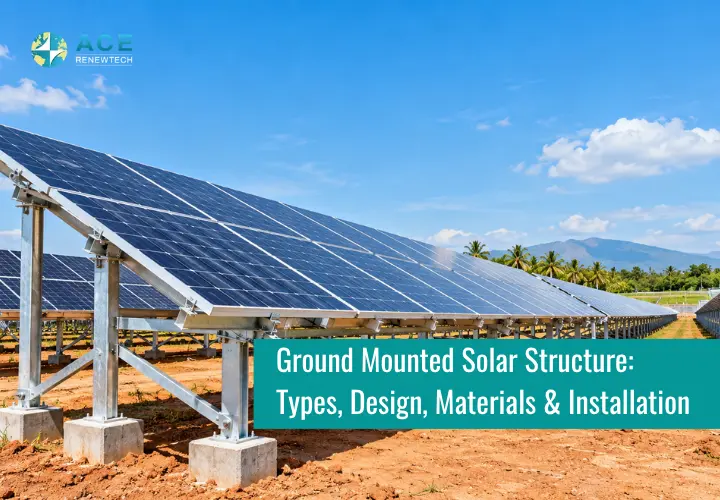
Ground Mounted Solar Structure: Types, Design, Materials & Installation
Introduction
A ground mounted solar structure is an engineered framework installed on the ground to support solar photovoltaic (PV) panels at the correct angle and orientation. It is commonly used in commercial, industrial and utility-scale solar projects where sufficient land is available. The right structure depends on soil conditions, wind loads, panel layout, environmental exposure and project capacity.
For businesses planning a solar installation, choosing the right mounting structure is essential for structural stability, maintenance access and long-term system performance. A suitable design helps support solar panels while meeting the project's engineering and site requirements.
What Is a Ground Mounted Solar Structure?
A ground mounted solar structure is a supporting framework secured to foundations on the ground to hold solar PV modules in their intended position. It maintains panel alignment, tilt and spacing while supporting the loads acting on the system.
Unlike rooftop solar systems, ground-mounted installations use dedicated land. This provides flexibility in panel arrangement, equipment access and project planning.
The structure must be designed according to local wind conditions, soil-bearing capacity, module specifications, corrosion exposure and applicable engineering standards. A properly engineered framework supports reliable operation and helps simplify inspection and maintenance.
Types of Ground Mounted Solar Structures
The appropriate structure depends on the project location, energy requirements, maintenance expectations and budget.
1. Fixed-Tilt Solar Structures
Fixed-tilt structures hold solar panels at a predetermined angle. They are widely used in commercial and utility-scale installations because they have a relatively simple design and fewer moving parts.
Their benefits include straightforward maintenance, predictable structural requirements and suitability for many large solar projects. Panel tilt and orientation should be selected based on the location, shading conditions and energy-generation objectives.
2. Single-Axis Solar Tracking Structures
Single-axis tracking systems move solar panels along one axis to follow the sun throughout the day. Depending on the location and system design, tracking can increase energy generation compared with fixed-tilt installations.
However, tracking systems require additional mechanical components, controls and maintenance. Wind conditions, operating costs, land layout and expected energy gains should be evaluated before choosing this option.
3. Foundation-Based Mounting Systems
Solar structures may use driven piles, ground screws, concrete foundations or other engineered foundation solutions. The suitable option depends on soil conditions, groundwater, terrain, structural loads and installation constraints.
A geotechnical assessment helps engineers determine the appropriate foundation approach. No single foundation type is ideal for every project, so site-specific evaluation is important.
Ground Mounted Solar Structure Design: Key Factors
Effective ground mounted solar structure design begins with a detailed assessment of the installation site. The framework and foundations must support the solar modules and withstand the environmental loads expected at that location.
Important design considerations include:
- Soil conditions: Soil strength and composition influence foundation selection and load-bearing capacity.
- Wind loads: Engineers must assess local wind conditions and the forces acting on the panels and supporting framework.
- Panel tilt and orientation: The layout should suit the location, shading conditions and energy-generation objectives.
- Material strength: Structural members and connections must meet the calculated load requirements.
- Corrosion protection: Materials and coatings should account for humidity, rainfall and coastal exposure where relevant.
- Drainage: Appropriate grading and water management help reduce waterlogging around foundations.
- Maintenance access: Adequate spacing supports inspection, cleaning and equipment servicing.
- Electrical safety: The layout should accommodate suitable cable routing, earthing and access to electrical equipment.
For projects in Tamil Nadu and other parts of India, local weather conditions and applicable structural requirements should be considered during engineering. Qualified professionals should validate the final design using site-specific information and relevant standards.
Materials Used in Solar Mounting Structures
Material selection affects structural strength, durability, installation methods and maintenance requirements.
Galvanized Steel
Galvanized steel is widely used because of its strength and protective zinc coating. It can be suitable for many fixed-tilt installations when member sizes, connections and coating specifications are selected appropriately.
Aluminium
Aluminium is lightweight and naturally corrosion-resistant. It may be suitable for particular components, depending on the structural design, mechanical properties and project requirements.
Fasteners and Protective Coatings
Bolts, nuts, clamps and other connections must be compatible with the selected materials and designed for the expected loads. Appropriate corrosion protection is especially important in humid or coastal environments.
The final material specification should account for environmental exposure, expected service life, structural performance and maintenance requirements.
Ground Mounted Solar Installation: Step-by-Step Process
A successful ground mounted solar installation requires coordination between civil, structural, mechanical and electrical teams.
- Site assessment: Evaluate land availability, terrain, shading, drainage, access roads and grid connectivity.
- Soil investigation: Conduct appropriate geotechnical assessments to understand soil conditions and foundation requirements.
- Engineering and design: Finalize the structural layout, panel tilt, foundation approach, wind-load calculations and panel arrangement.
- Foundation installation: Install the selected foundation system according to approved engineering drawings and site conditions.
- Structure assembly: Erect and align the framework, checking connections against approved design specifications.
- Solar panel mounting: Secure the modules using compatible mounting components and follow the manufacturer’s installation instructions.
- Electrical integration: Complete cabling, earthing, inverter connections and associated electrical work in accordance with applicable requirements.
- Inspection and commissioning: Verify structural alignment, electrical safety and system operation before commissioning.
Following a planned installation process helps reduce avoidable errors and supports dependable system operation.
What Affects the Cost of a Ground Mounted Solar Project?
The cost of a ground mounted solar project depends on more than the mounting framework alone. The final investment varies according to site conditions, equipment specifications and the overall project scope.
Major cost factors include:
- Installed capacity and number of solar modules
- Structure type and foundation requirements
- Soil conditions and land preparation
- Steel or aluminium specifications and protective coatings
- Wind-load requirements and design complexity
- Labour, transportation and installation access
- Electrical infrastructure and grid connectivity
- Drainage, maintenance access and site development
Sites with difficult soil conditions or extensive preparation requirements may need different engineering solutions from sites with favourable ground conditions. A reliable estimate should therefore be based on a project-specific assessment rather than a generic price.
How to Choose the Right Solar EPC Partner
A qualified engineering, procurement and construction (EPC) partner helps coordinate structural design, equipment procurement, installation and electrical integration.
Before selecting a partner, evaluate:
- Experience in commercial and utility-scale solar PV projects
- Coordination of civil, structural and electrical engineering
- Understanding of site conditions and applicable standards
- Quality checks during procurement and installation
- Project scheduling, commissioning and maintenance support
- Ability to recommend solutions based on actual project requirements
The right partner should explain available options, identify site-specific constraints and provide a clear scope of work before implementation begins.
For a broader understanding of project planning, land requirements and system components, read our guide to Ground Mounted Solar Power Plant in India. It explains important considerations involved in planning a ground-mounted solar power plant.
Planning a Ground-Mounted Solar Project?
ACE RenewTech Engineering Private Limited, headquartered in Chennai, Tamil Nadu, provides solar EPC solutions for utility-scale solar PV projects and Battery Energy Storage Systems (BESS).
If your organisation is evaluating a ground mounted solar project, contact ACE RenewTech to discuss your project location, planned capacity, site conditions and engineering requirements. Sharing these details helps the team understand your requirements and discuss suitable next steps.
Planning a commercial or utility-scale solar project? Get in touch with ACE RenewTech to discuss your solar EPC requirements.
Frequently Asked Questions (FAQs)
1. What is a ground mounted solar structure?
A ground mounted solar structure is a framework secured to foundations on the ground to support solar PV panels at a suitable angle and orientation.
2. Which materials are commonly used for solar mounting structures?
Galvanized steel and aluminium are common materials. The right choice depends on structural loads, corrosion exposure, engineering requirements and project economics.
3. Which type of ground-mounted solar structure is best?
Fixed-tilt structures suit many projects because of their simpler design and maintenance. Tracking structures may be suitable where the potential increase in energy generation justifies the additional investment and maintenance.
4. Why are soil conditions important when designing solar structures?
Soil conditions influence foundation selection, load-bearing capacity and installation methods. A suitable site investigation helps engineers determine an appropriate foundation design.
5. How long does ground-mounted solar installation take?
The timeline depends on project capacity, site preparation, approvals, equipment availability, foundation work and grid connectivity. A project-specific schedule is needed to estimate the duration accurately.
6. Can a ground-mounted solar panel system be installed on any land?
No. A ground mounted solar panel system requires suitable land conditions, including appropriate soil strength, terrain, drainage, access and grid connectivity. Site assessment is necessary before confirming feasibility.
7. Does ACE RenewTech provide solar EPC solutions?
ACE RenewTech provides solar EPC solutions for utility-scale solar PV projects. Businesses can contact the team to discuss their project requirements and potential engineering approach.
Conclusion
A well-engineered ground mounted solar structure supports solar panels, accommodates site-specific environmental conditions and provides access for inspection and maintenance. Selecting the right structure requires careful consideration of foundations, materials, wind loads, panel layout and installation requirements.
For commercial and utility-scale projects, an experienced solar EPC partner can help coordinate these requirements from engineering through commissioning. ACE RenewTech can discuss project-specific solar PV requirements with businesses planning their next solar installation.
Contact ACE RenewTech to discuss your utility-scale solar PV project and engineering requirements.
Recent Posts
Enquire Now
Recent Posts
On Grid and Off Grid Solar System: Differences, Working & Benefits
October 21, 2026
Ground Mounted Solar: Definition, Types, Uses & Benefits
September 29, 2026