
Solar PV Applications: Types, Uses & Benefits
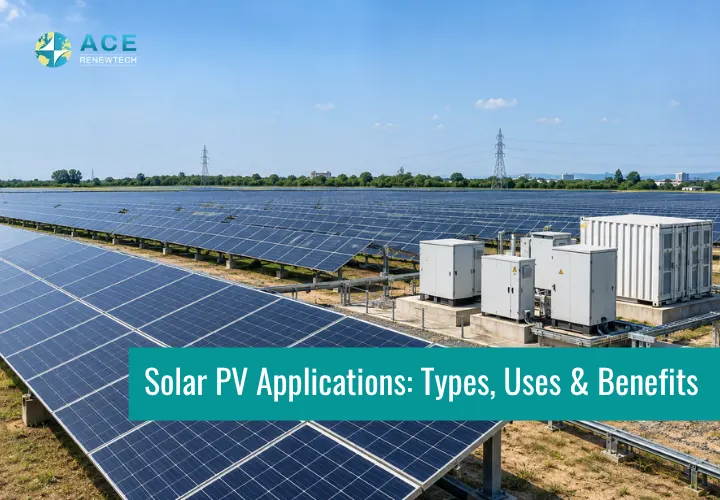
Solar photovoltaic (PV) technology converts sunlight into electricity for different energy requirements. A Solar PV Application is the practical use of photovoltaic technology for generating electricity in residential, commercial, industrial, utility-scale, or off-grid projects.
The right solar PV system depends on electricity demand, available space, solar resource, project capacity, grid connection, system design, and long-term operating requirements.
What Is Solar PV Technology?
A Solar PV Application is the use of photovoltaic technology to generate electricity from sunlight for a specific purpose. Common uses include rooftop solar systems, commercial and industrial installations, ground-mounted solar plants, utility-scale projects, and off-grid systems.
The system configuration varies based on electricity demand, location, available installation area, and grid requirements.
What Are the Main Types of Solar PV Applications?
Different solar PV systems are designed to meet different energy requirements and operating conditions.
1. Residential Rooftop Solar
Residential rooftop solar systems are installed on houses and other buildings to generate electricity for daily consumption. Depending on the applicable grid and metering arrangement, excess electricity may also be supplied to the grid.
2. Commercial and Industrial Solar
Commercial and industrial solar systems are used by businesses, factories, warehouses, offices, and other facilities to generate electricity.
For these projects, energy consumption analysis, system sizing, electrical design, equipment selection, and performance monitoring are important. A well-planned Solar PV Application should match generation capacity with the facility's energy requirements and operating conditions.
3. Ground-Mounted Solar PV
Ground-mounted solar systems are installed on suitable land using dedicated mounting structures. They are commonly considered when sufficient ground area is available.
Site assessment, solar irradiation, shading, land conditions, electrical infrastructure, and grid connectivity are important during project planning.
4. Utility-Scale Solar Power Plants
Utility-scale solar power plants generate electricity at large capacities and supply power to the grid. These projects require detailed engineering and coordination across multiple stages.
Typical activities include site assessment, energy yield analysis, system design, procurement, construction, commissioning, grid integration, monitoring, and operations and maintenance.
5. Off-Grid Solar PV
Off-grid solar systems are designed for locations where grid electricity is unavailable or unreliable. They can be integrated with battery storage to provide electricity when solar generation is unavailable.
How Does Solar PV Technology Work?
A photovoltaic system converts sunlight into usable electrical energy:
Sunlight → PV Cells → DC Electricity → Inverter → AC Electricity → Loads or Grid
PV cells in solar modules generate direct current (DC) electricity when sunlight reaches the cells. The inverter converts DC electricity into alternating current (AC), which can be used by electrical loads or supplied to the grid.
System performance depends on solar irradiation, module orientation, shading, temperature, equipment selection, system design, and electrical losses.
What Are the Benefits of Solar PV Systems?
A properly designed Solar PV Application can provide benefits for residential, commercial, industrial, and utility-scale projects.
- Generates electricity from sunlight
- Supports renewable energy adoption
- Reduces dependence on conventional electricity sources
- Makes use of suitable rooftop or ground space
- Can be deployed across different project sizes
- Can be integrated with battery energy storage
- Supports long-term energy planning
- Enables system monitoring and performance analysis
For commercial and industrial projects, engineering quality and regular O&M are important for maintaining reliable system performance.
What Factors Affect Solar PV System Performance?
Solar PV performance depends on more than the number of panels installed. Important factors include:
- Solar irradiation at the project location
- Module orientation and tilt
- Shading and site conditions
- PV module and inverter selection
- System capacity and electrical design
- Cable and conversion losses
- Monitoring and performance analysis
- Preventive and corrective O&M
A detailed technical assessment can help identify the appropriate system configuration before installation.
Solar PV in India
India uses solar PV technology across residential, commercial, industrial, and utility-scale projects. Businesses planning a Solar PV Application should evaluate electricity consumption, available installation area, solar resource, grid requirements, project capacity, and long-term operating needs.
For larger projects, the development process can include site assessment, engineering, procurement, construction, commissioning, grid integration, monitoring, and O&M.
Choosing an experienced solar engineering and EPC partner can help coordinate these technical requirements throughout the project lifecycle.
What Is the Future of Solar PV Technology?
The future of solar PV is increasingly connected with Battery Energy Storage Systems (BESS), digital monitoring, energy management, and Artificial Intelligence (AI).
How Can AI Be Used in Solar PV Systems?
AI can analyse solar generation and operational data to identify unusual performance patterns, support predictive maintenance, forecast energy generation, and improve energy management.
For commercial, industrial, and utility-scale projects, AI-based analytics can help identify potential equipment issues and provide data-driven insights for system operation. When combined with solar monitoring and BESS, AI can support better management of generation, storage, and energy demand.
These technologies can complement solar engineering and O&M by making system data more useful for operational decision-making.
Frequently Asked Questions
What Is a Solar PV Application?
A Solar PV Application is the practical use of photovoltaic technology to generate electricity from sunlight for a specific requirement, such as residential, commercial, industrial, or utility-scale power generation.
What Are the Main Types of Solar PV Systems?
The main types include residential rooftop solar, commercial and industrial solar, ground-mounted solar, utility-scale solar power plants, and off-grid solar systems.
Can Solar PV Work With Battery Storage?
Yes. Solar PV systems can be integrated with Battery Energy Storage Systems (BESS) to store electricity and manage energy based on project requirements.
How Can AI Help Solar PV Systems?
AI can analyse generation and operational data, identify unusual performance patterns, support predictive maintenance, forecast energy generation, and assist with energy management.
What Should Businesses Consider Before Installing Solar PV?
Businesses should consider electricity consumption, available space, solar resource, system capacity, equipment selection, grid connectivity, electrical design, monitoring, and long-term O&M.
Planning a Solar PV Project?
Ace Renewtech provides solar engineering and EPC solutions for commercial, industrial, and utility-scale solar projects. Its capabilities include solar PV project development, utility-scale solar solutions, BESS integration, and Solar Operations & Maintenance.
If you are evaluating a Solar PV Application for your business or solar project, a technical assessment can help determine the appropriate system configuration and project requirements.
Talk to Ace Renewtech about your solar engineering, EPC, BESS, or O&M requirements.
Recent Posts
Enquire Now
Recent Posts
Ground Mounted Solar: Definition, Types, Uses & Benefits
September 29, 2026