
What Is a Solar Power Plant? Types, Price, Subsidy & More
Introduction:
In recent years, the global shift towards more renewable energy sources has gained more significance, and solar power has emerged as a leading source in the race to reduce carbon emissions and combat climate change. Solar power plants and their ability to harness the sun’s energy and convert it into electricity have become essential in the path of transitioning to a sustainable energy future. As we navigate through this transition, a comprehensive understanding about solar power plants, their types, and their various facets is important. In this blog, we will explore the different types of solar power plants and other relevant features.
What are Solar Power Plants
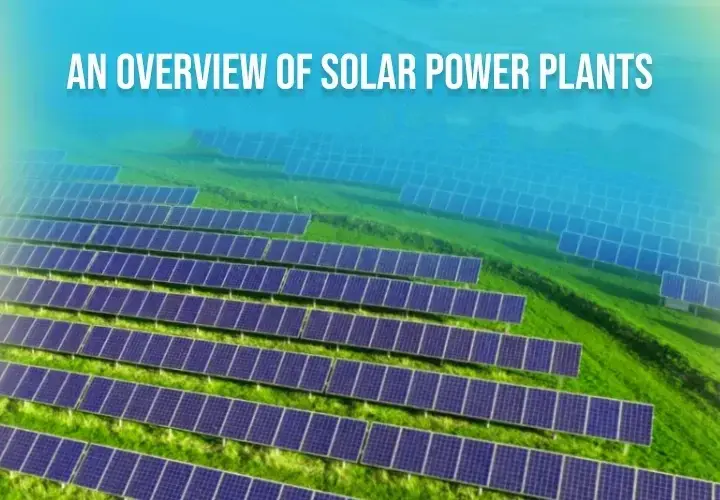
Solar Power Plants, also known as solar farms, are large-scale facilities that are capable of generating electricity by converting sunlight into electrical energy. They generate more electricity when the earth receives maximum sunlight. They also generate power by burning fossil fuel to produce steam, which drives the turbines to produce electricity.
They help in keeping the environment pollution-free and to save energy. They are constructed with four main components panels, inverters, racking, and solar battery storage units. They come in various types and use photovoltaic (PV) modules, solar panels, or concentrated solar power (CSP) systems for energy conversion.
Types of Solar Power Plants
Solar power plants are broadly classified based on their energy conversion technology and applications. The three main types are:
Photovoltaic (PV) Solar Power Plants:
Photovoltaic (PV) solar power plants are among the most common solar energy systems in use today. They use panels equipped with photovoltaic cells to convert sunlight directly into electricity, ranging from small rooftop setups to large utility-scale solar farms. With growing demand, numerous companies—including leading solar PV consultants in India—are actively delivering advanced solar PV energy solutions.
Concentrated Solar Power (CSP) Plants:
CSP power plants use mirrors or lenses to concentrate sunlight onto a small area, which in turn generates heat to drive steam turbines for producing electricity. These solar power plants are often integrated with thermal energy storage systems, which enable them to generate power even during periods of limited sunlight. Other major components are solar fields and power blocks.
The solar field plays the main role in a CSP plant. It consists of reflectors that reflect and collect the sun’s radiation into a specific area known as the “heat collection element” whereas the power block is the part where the thermal energy from the collector field is converted to electrical energy.
Solar Thermal Power Plants:
These power plants also employ mirrors to concentrate a large amount of sunlight into a smaller area. This sunlight is then used to heat a fluid, typically molten salt, which then generates steam and drives a turbine for electricity production. All solar thermal power plants are based on four basic essential systems which are collectors, absorbers(receiver), transport or storage, and power conversions. Some technologies that are commercially available today are Parabolic Troughs, Solar Towers, Parabolic Dishes, and Linear Fresnel Reflectors.
Pricing of Solar Power Plants:
The pricing of solar power plants depends on several factors, including installation scale, technology choice, geographic location, and local conditions. Recently, declining costs of solar panels and related components have made solar power an increasingly affordable and effective energy-saving solution. Advancements in technology—particularly in turnkey EPC solutions across India—have enabled solar engineering companies to deliver cost-effective power plants without compromising quality or expertise.
Subsidies and Incentives:
Governments and environmental agencies worldwide have been in crucial need of solar power in the transition to a cleaner, greener, and more sustainable ecosystem. To encourage and facilitate this shift, numerous subsidy programs and financial incentives have been implemented to support the costs of solar power plant installations. From tax credits to feed-in tariffs, these initiatives not only make solar power plants accessible but also stimulate customers to invest in renewable energy solutions, contributing to saving the earth.
Environmental Impacts:
Beyond the economic considerations, the environmental impact of switching to solar power is tremendous. With zero greenhouse gas emissions during operation, these power plants significantly reduce air and water pollution, resulting in clean air for the environment. Furthermore, the impact of solar power plants on land and water is relatively minimal compared to other forms of energy production. Solar panels can be installed on rooftops and open fields without disturbing any landscapes, and they do not rely on water for cooling or heat generation.
Advantages of Solar Power Plants
Apart from reducing pollution and saving costs, solar plants offer many benefits:
- Renewable & Abundant – Sunlight is available everywhere, making solar power reliable.
- Low Operating Costs – Once installed, maintenance is minimal compared to thermal plants.
- Energy Independence – Reduces reliance on imported fossil fuels.
- Scalability – Can be built for small homes or scaled up to mega solar parks.
- Job Creation – Solar EPC companies in India create thousands of jobs in design, installation, and maintenance
Future Prospects:
Looking ahead, technological advancements promise a bright future for solar power plants. The rise of more solar EPC companies in India paves the way for a sustainable future—powered by efficient, reliable energy for a cleaner, greener world. In summary, solar power plants are essential in the global shift toward energy conservation and sustainable living. Join this revolution by contacting us to begin your journey toward a cleaner environment.
Frequently Asked Questions (FAQs)
1. How long do solar power plants last?
Solar panels typically last 25–30 years, with minimal drop in efficiency over time.
2. Can solar power plants work at night?
Direct electricity generation stops at night, but with battery storage systems or CSP (concentrated solar power) thermal storage, power can be supplied round the clock.
3. How much land is required for 1 MW of solar power plant?
On average, 4–5 acres of land are required for a 1 MW solar PV power plant (depending on layout, tilt, and spacing).
4. Are subsidies available for solar plants in India?
Yes — both central and state governments provide subsidies, net metering benefits, and financial incentives for solar projects. Availability depends on the state and scheme; check your local DISCOM or solar portal.
5. Which companies provide solar power plant installation in India?
Several leading Solar EPC companies in India — such as AceRenewTech — provide end-to-end solutions including design, engineering, procurement, and installation.
Despite the rapid global shift toward solar energy as a preferred green alternative, many people still feel overwhelmed by installation and maintenance concerns. As a leading O&M solution provider, we believe every customer deserves maximum output from their solar investment. We offer comprehensive solutions for the operation and maintenance of solar power plants, making the transition to solar energy smoother and more achievable. With our tailored services, you can feel confident and satisfied with your system's abundant energy production.
Recent Posts
Enquire Now
Recent Posts
Ground Mounted Solar: Definition, Types, Uses & Benefits
September 29, 2026