
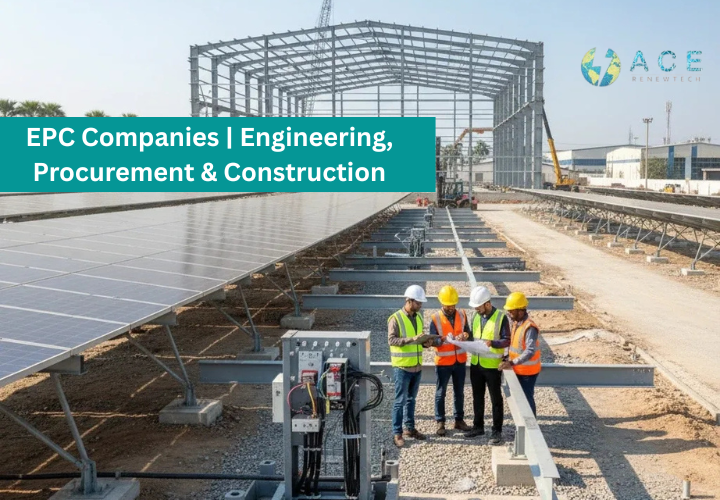
Introduction
Any engineering project, whether it involves infrastructure, energy, or industrial facilities, requires expertise, accuracy, and coordination among various stakeholders. This is where EPC companies play a major role. Today, EPC companies in India handle complex projects across power, infrastructure, and renewable energy sectors by offering complete engineering, procurement, and construction solutions under a single contract.
Introduction to EPC Companies
An EPC organisation is a company that handles the engineering, procurement, and construction of a project under a single contract. This model provides clients with a turnkey solution, meaning that the contractor is responsible for delivering a complete and ready-to-operate facility.
It eliminates the need for numerous contractors and ensures smooth communication and accountability. Such companies are also part of the oil and gas, power station, renewable energy, infrastructure and manufacturing industries.
These EPC contractors are widely used in large-scale industrial and solar power projects for efficient and reliable execution.
What Does EPC Stand For?
Engineering, procurement, and construction, or EPC, is a model used for project delivery where the contractor handles all aspects of a project’s implementation.
- Engineering: This phase involves feasibility studies, in-depth design, and technical requirements. The structure is conceptualised by engineers, and all the elements should be in line with the safety, quality, and performance of the project.
- Procurement: The procurement stage focuses on identifying the necessary materials, equipment, and technology. EPC organisations have an extensive network of supply chains worldwide to ensure cost-effectiveness and timely delivery.
- Construction: Lastly, the construction stage requires bringing together all the elements at the site and managing the manpower and logistics as well as quality control and ensuring that the project is completed within the agreed duration.
Role of EPC Companies in Project Management
The role of EPC organisations extends beyond construction. They are the project managers, and all activities, such as the design and delivery, are carefully synchronised. Project management under the EPC Companies in Chennai model involves risk assessment, cost control, scheduling, and resource allocation.
Leading EPC companies in India use advanced digital tools and project management systems to ensure on-time delivery and cost efficiency.
Some EPC companies in Chennai also follow similar project management practices for efficient execution.
Key Services Offered by EPC Companies
The most notable services that are provided by EPC companies in India include:
- Feasibility studies and design engineering.
- Supply chain management and procurement.
- Site and construction management.
- Start-up support and commissioning.
- Maintenance and post-construction services.
Many solar EPC companies also provide end-to-end solar power plant solutions, including installation, testing, and maintenance.
How EPC Contractors Manage Large-Scale Projects
Major projects like power plants, refineries or transport infrastructure should be planned and executed carefully. Project management methodologies, data analytics, and real-time monitoring systems are high-end tools used by EPC experts to track every stage.
This makes EPC contractors a preferred choice for complex infrastructure and large-scale energy projects.
Top EPC Companies in India and Their Expertise
India is home to several major EPC companies that have established a global presence. Among these, ACERenewtech is recognised for its innovation, the use of the latest technology, and for meeting international safety and quality standards.
AceRenewTech, a trusted solar EPC company, delivers reliable and scalable solutions for modern infrastructure and energy projects
Solar EPC Companies and Renewable Energy Projects
With India’s increasing focus on clean energy, solar EPC companies play a crucial role in renewable energy development. These companies handle the design, procurement, installation, and commissioning of solar power plants.
Businesses searching for solar EPC companies near me often prefer experienced EPC contractors who can provide local execution support along with technical reliability.
Key Benefits of EPC Companies
EPC companies simplify project execution by providing a single point of responsibility, ensuring better coordination and accountability throughout the project lifecycle. They help reduce risks, control costs, and ensure timely project completion through efficient planning and execution. EPC contractors also maintain high quality standards and improve overall efficiency, making them ideal for large-scale infrastructure, industrial, and renewable energy projects.
Challenges Faced by EPC Companies
Despite their experience, EPC contractors have not managed to avoid several challenges. These include changes in the prices of raw materials, delays in government approvals, and logistical factors.
Furthermore, there is always a need to maintain a talented workforce and follow the environmental standards.
Future Trends in EPC Services
Digitalisation and sustainability are shaping the future of engineering, procurement and construction. The use of Artificial Intelligence (AI), the Internet of Things (IoT), and automation are changing how a project is designed and implemented.
Moreover, government projects in India, such as Make in India and concentrated infrastructure development in renewable energy, are projected to further boost the growth of the EPC industry in the future.
Conclusion
Bringing together engineering precision, procurement efficiency, and construction excellence, EPC companies in India form the backbone of modern infrastructure development.
Businesses looking for EPC companies in Chennai can benefit from experienced contractors offering end-to-end solutions.
Looking for a reliable EPC company? AceRenewTech offers expert engineering, procurement, and construction solutions tailored to your project needs.