
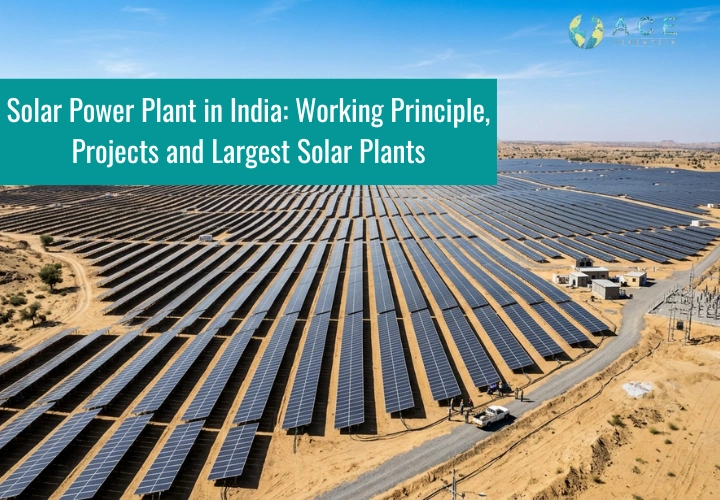
The demand for clean and sustainable energy has been growing over the years. One of the most promising options to satisfy the rising energy demands is a solar power plant in India. This blog examines the concept of a solar power plant, key projects, and the impact it has on the future of renewable energy in India.
Introduction to Solar Power Plant in India
Solar power plants refer to the facilities that convert sunlight into electricity through the use of advanced technologies. These plants are extensively spread out in different states in India, particularly in the states that receive high levels of solar radiation, like Rajasthan, Gujarat and Tamil Nadu.
A solar energy power plant can be installed at a utility-level scale to provide power to thousands of households or in smaller setups to power just a single household.
Solar Power Plant Working Principle
The solar power plant’s working principle includes the following key steps:
- Solar panels absorb sunlight and transform it into direct current (DC) electricity.
- An inverter transforms DC to alternating current (AC), used in household and industrial systems.
- The power is then passed on to the electric grid or consumed locally.
- Monitoring systems are used to achieve efficient performance and maintenance.
Solar Energy Power Plant and Solar PV Power Plant Technology
Solar power plants use photovoltaic (PV) cells to convert sunlight directly into electricity.
Solar power plants may use the following technologies:
- Photovoltaic (PV) systems for direct electricity generation.
- Concentrated solar power stations that use mirrors to focus sunlight.
- Hybrid systems that make use of solar with other sources of energy.
Solar Power Plant Project Development in India
The development of solar power plants in India involves several stages, with each stage being carefully planned and executed.
The major stages include:
- Selection of the site depending on the solar radiation and land area availability.
- Government approvals and regulatory compliance.
- Solar panel and infrastructure installation.
- Connectivity and testing of the grids.
- Operation and maintenance
Largest Solar Power Plant in India
India has some of the most advanced and large-scale installations in the world.
Notable projects include:
- Bhadla Solar Park in Rajasthan is widely recognised as the largest solar power plant in India.
- Pavagada Solar Park in Karnataka.
- Kurnool Ultra Mega Solar Park in Andhra Pradesh.
World’s Largest Solar Power Plant and Global Solar Growth
Countries have also started investing a lot of money in solar infrastructure, including China, the United States and India.
The growth of the world’s largest solar power plant shows:
- Increasing use of clean energy solutions.
- Improvement of the technology used in solar panels.
- Lowered prices of solar installations.
- Strong government policies in favour of renewable energy.
Rooftop Solar Power Plant for Residential and Commercial Use
A rooftop solar power plant is a decentralised plant that is placed on the roofs of houses, offices, and businesses.
The advantages of rooftop solar power plants are:
- Reduction in power expenses.
- Energy independence
- Efficient use of an unused roof.
- Lower carbon footprint
Advantages and Disadvantages of Solar Power Plant
The advantages and disadvantages of solar power plants help us to make informed choices on whether or not to adopt solar energy.
The advantages include:
- A green and clean energy source.
- Low operations and maintenance expenses.
- Cutting down greenhouse gas emissions.
- Small- to large-scale installation as per need.
The disadvantages include:
- High initial installation cost.
- It relies on the weather conditions.
- Utility-scale plants need large areas of land.
- Energy storage challenges
Role of Solar Power Plants in India’s Renewable Energy Future
With the ambitious goals set by the government, solar energy is set to become a major contributor to the overall energy production portfolio in India.
Key contributions include:
- Carbon emission reduction.
- Energy security and minimal dependence on exports.
- Increased employment in the renewable energy sector.
- Supporting the Sustainable Development Goals.
Last Thoughts
As the technology for solar power plants in India keeps progressing, and more capital is invested in the development of solar power projects, India may eventually become a global leader in solar energy. The adoption of solutions such as the rooftop solar projects can assist people and companies in making the future better and more sustainable.