
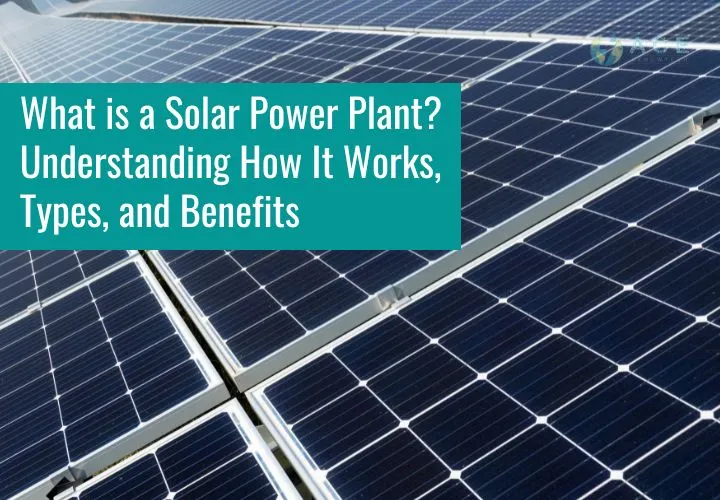
A solar power plant is a facility that generates electricity by converting sunlight into usable electrical energy using photovoltaic panels or solar thermal systems. These plants produce clean, renewable power and help reduce dependence on fossil fuels while meeting increasing electricity demand in a sustainable way.
With global focus shifting toward renewable energy, solar power plants have become a key solution for long-term power generation, especially in regions with high solar potential like India.
What Is a Solar Power Plant?
A solar power plant is a large-scale energy system designed to capture sunlight and convert it into electricity for commercial, industrial, or grid supply. Unlike rooftop solar installations meant for individual buildings, solar power plants are built to generate electricity on a much larger scale.
These plants are typically connected to power grids or dedicated users and operate using advanced solar technologies that ensure reliable and continuous energy generation during daylight hours.
How Does a Solar Power Plant Work?
The working of a solar power plant follows a simple and efficient energy conversion process:
-
Sunlight collection
Solar panels or collectors absorb sunlight falling on their surface. -
Energy conversion
The absorbed sunlight is converted into electrical energy or heat, depending on the technology used. -
Power conditioning
The generated power is stabilized and converted into usable electricity suitable for transmission. -
Distribution
Electricity is supplied to the grid, industries, or storage systems for later use.
This process enables consistent generation of electricity without fuel consumption or emissions.
Solar Power: Clean and Renewable Energy
Solar power is energy obtained directly from sunlight. It is one of the most abundant and environmentally friendly energy sources available today.
Key advantages of solar power include:
-
Zero emissions during electricity generation
-
Reduced dependence on non-renewable resources
-
Long-term energy cost savings
-
Minimal environmental impact
Solar power plants harness this natural resource to support sustainable development and energy security.
Types of Solar Power Plants
Solar power plants are classified based on how sunlight is converted into electricity.
Solar Photovoltaic (PV) Power Plants
Photovoltaic power plants use solar panels made of semiconductor materials to convert sunlight directly into electricity. These plants are widely adopted due to their scalability, lower maintenance requirements, and declining installation costs.
They are commonly used in utility-scale projects, solar parks, and industrial power generation.
Solar Thermal Power Plants
Solar thermal power plants use mirrors or lenses to concentrate sunlight and generate heat. This heat produces steam, which drives turbines to generate electricity.
These plants are suitable for large-scale power generation and can include thermal storage systems to produce power even after sunset.
Solar Power Solutions for Modern Energy Needs
Solar power solutions refer to integrated systems that generate, manage, and distribute solar energy efficiently. Solar power plants form the backbone of these solutions.
Solar power solutions help:
-
Reduce electricity expenses
-
Improve energy reliability
-
Support renewable energy targets
-
Promote sustainable infrastructure
Governments, utilities, and industries increasingly invest in solar power solutions to meet long-term energy goals.
Solar Power Plant in India
A solar power plant in India plays a critical role in the country’s renewable energy expansion. India receives abundant sunlight throughout the year, making it ideal for large-scale solar energy generation.
Key factors driving growth include:
-
Favorable climatic conditions
-
Government incentives and policies
-
Increasing power demand
-
Focus on reducing carbon emissions
Solar power plants across India now contribute significantly to national electricity generation and economic growth.
Benefits of Solar Power Plants
Solar power plants offer several environmental and economic advantages.
Environmental Benefits
-
Clean energy generation
-
Reduced greenhouse gas emissions
Economic Benefits
-
Low operating and maintenance costs
-
Long-term savings on electricity
Energy Security
-
Reduced reliance on imported fuels
-
Stable and predictable power generation
Scalability
-
Suitable for small, medium, and large projects
Applications of Solar Power Plants
Solar power plants are used in:
-
Utility-scale electricity generation
-
Industrial and commercial power supply
-
Renewable energy parks
-
Grid-connected and hybrid systems
They are a vital part of large-scale solar power solutions worldwide.
Challenges in Solar Power Plant Development
Despite their advantages, solar power plants face certain challenges:
-
Initial capital investment
-
Land requirements for large projects
-
Dependence on sunlight availability
-
Need for energy storage or grid support
Continuous technological advancements are helping overcome these limitations.
Future of Solar Power Plants
The future of solar energy is driven by improvements in panel efficiency, energy storage technologies, and smart grid integration. Solar power plants are expected to play a central role in global energy systems as countries move toward cleaner power generation.
With innovation and policy support, solar power plants will continue to grow as a reliable and cost-effective energy solution.
Conclusion
A solar power plant is a cornerstone of renewable energy generation, converting sunlight into clean and sustainable electricity. By understanding solar power, modern solar power solutions, and the importance of a solar power plant in India, it becomes clear why solar energy is shaping the future of power generation. Solar power plants will remain essential for achieving energy security, environmental protection, and long-term sustainability.