
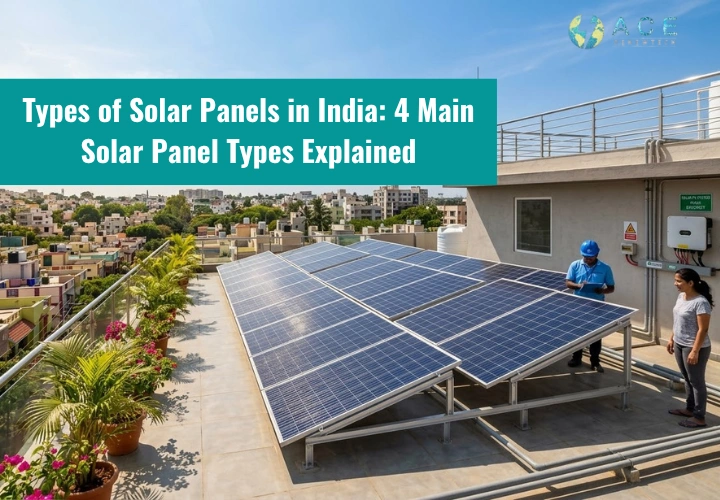
As electricity costs continue to rise and environmental awareness increases, many homeowners and businesses are turning towards solar energy. Understanding the types of solar panels in India is essential before investing in a solar power system. Choosing the right panel helps improve efficiency, reduce costs, and ensure long-term performance.
In this guide, we will explore the types of solar panels, how they work, their advantages, and key factors to consider before installation.
Types of Solar Panels in India
There are different types of solar panels in India, but the most commonly used ones fall into four main categories:
1. Monocrystalline Solar Panels
Monocrystalline panels are considered one of the best solar panels available today. These panels are made from a single crystal structure, which allows higher efficiency and better performance even in low-light conditions.
They require less space compared to other panels and are ideal for residential installations where roof space is limited. Though slightly expensive, they offer long-term value.
2. Polycrystalline Solar Panels
Polycrystalline panels are widely used among the types of solar panels in India due to their affordability. These panels are made from multiple silicon crystals, making them cost-effective.
While their efficiency is slightly lower than monocrystalline panels, they are still a great option for homes and small businesses looking for budget-friendly solar solutions.
3. Thin-Film Solar Panels
Thin-film panels are lightweight and flexible compared to traditional panels. These types of solar panels in India are mostly used in large-scale commercial or industrial projects.
They require more space due to lower efficiency but are easier to install and suitable for unconventional surfaces.
4. Bifacial Solar Panels
Bifacial panels are advanced types of solar panels in India that can absorb sunlight from both sides. This increases energy generation and improves overall performance.
They are commonly used in large solar power plants and are gaining popularity in modern solar panel installation projects.
How Solar Panels Work
All types of solar panels in India work using photovoltaic (PV) technology. Solar panels absorb sunlight and convert it into direct current (DC) electricity.
An inverter then converts DC into alternating current (AC), which can be used to power homes, offices, and industries. This process makes solar energy a reliable and sustainable solar power solution.
Best Solar Panels for Residential and Commercial Use
Selecting the right option from the types of solar panels in India depends on your energy needs, budget, and available space.
- Residential use: Monocrystalline panels are preferred due to high efficiency and compact size
- Commercial use: Polycrystalline and bifacial panels offer a balance of cost and performance
- Industrial use: Thin-film panels are suitable for large installations
It is always recommended to consult experts before choosing the right solar panel manufacture and system design.
Solar Panel Size and Efficiency
The solar panel size plays a crucial role in energy generation. Larger panels produce more electricity, but efficiency also depends on the type of panel used.
Different types of solar panels in India have varying efficiency levels:
- Monocrystalline – High efficiency
- Polycrystalline – Moderate efficiency
- Thin-film – Lower efficiency
- Bifacial – High output with dual absorption
Before installation, it is important to evaluate your roof space and power requirements.
Advantages of Solar Panels
All types of solar panels in India provide multiple benefits for both homes and businesses:
- Reduction in electricity bills
- Eco-friendly and renewable energy source
- Low maintenance requirements
- Increased property value
- Energy independence
These advantages make solar energy a smart long-term investment.
Solar Panel Installation Process
Proper solar panel installation is important for maximizing performance. The installation process includes:
- Site evaluation and feasibility analysis
- System design planning
- Mounting structure installation
- Panel setup and wiring
- Inverter connection
- Testing and commissioning
Professional solar panel installation ensures safety, durability, and optimal output.
Solar Panel Installation in Chennai
The demand for Solar Panel Installation in Chennai is growing rapidly due to favorable weather conditions and high solar exposure.
Chennai offers excellent potential for solar energy generation, making it ideal for both residential and commercial projects. Choosing experienced installers ensures better efficiency and long-term reliability.
Operation and Maintenance of Solar Power Plant
Efficient Operation and Maintenance of Solar Power Plant is essential for long-term performance.
Maintenance activities include:
- Regular inspection of panels and wiring
- Performance monitoring
- Timely repairs and replacements
Using proper maintenance practices improves the lifespan of all types of solar panels in India.
Solar Panel Cleaning System
Dust and dirt can reduce the efficiency of solar panels. A proper solar panel cleaning system helps maintain optimal performance.
Tools like a solar panel cleaning brush are commonly used to remove debris without damaging the panels. Regular cleaning ensures maximum energy output.
Conclusion
Understanding the types of solar panels in India is crucial for making the right investment in solar energy. From monocrystalline to bifacial panels, each type has its own advantages and applications.
By selecting the right panel, ensuring proper solar panel installation, and maintaining the system regularly, you can achieve maximum efficiency and long-term savings. Solar energy is not just a trend it is a sustainable solution for the future.